How to choose a leather jacket: a complete buying guide
To choose a leather jacket, look at five things in this order: the hide (lambskin or cowhide), the grade (full grain is best), the fit through the shoulders and arms, the build (lining, seams and hardware) and how the leather will age. Price follows from those choices, not the other way round. This guide explains what each one means, what to check in the shop and which warning signs should make you walk away.
Start with how you will wear it
A leather jacket is bought for years, so start with your own use before you look at any label. Ask how often you will wear it, in what weather and over what. A jacket worn every day through a wet autumn needs a tougher hide and room for a knit underneath. A jacket for evenings and mild days can be lighter and closer cut.
The cut matters as much as the leather. A biker jacket with an asymmetric zip, a clean zip front jacket, a bomber with rib at the cuffs and hem, a shirt jacket and a longer coat all wear differently. A plain design with few details is the easiest to wear with everything, from Japanese denim to tailoring, and it dates more slowly than one built on a trend.
Lambskin vs cowhide, and the other hides
The animal decides how a jacket feels, how heavy it is and how much wear it takes. Lambskin is thin, light and very soft. It drapes almost like cloth and needs no breaking in, but it scratches and scuffs more easily. Cowhide is thicker and firmer. It can feel stiff at first and needs weeks of wear before it moves with you, and it holds up better to daily use.
Between the two sit goatskin, with a visible pebbled grain and good strength for its weight, and calfskin, finer and smoother than adult cowhide. Horsehide is dense and stiff and mostly found in heritage reproductions. There is no best hide, only the right one for how you wear it.
| Hide | Feel | Weight | Durability | Best for |
|---|---|---|---|---|
| Lambskin | Soft, smooth, drapes | Light | Lower, marks easily | Close cuts, mild weather, worn with care |
| Goatskin | Supple, pebbled grain | Light to medium | Good | Daily wear with a softer hand |
| Calfskin | Fine and smooth | Medium | Good | Clean, refined jackets |
| Cowhide | Firm, softens with wear | Medium to heavy | High | Daily wear, wind and rain |
| Horsehide | Dense and stiff | Heavy | Very high | Heritage styles, long breaking in |
Leather grades: full grain, top grain and genuine leather
The grade describes which layer of the hide is used and how much the surface has been worked. For how a jacket ages, it matters more than the animal.
Full-grain leather keeps the complete outer surface, with its pores and small natural marks. It is the strongest layer and the one that develops a patina. Top-grain leather has been lightly sanded to remove marks and is usually finished with a coating: more even, a little less breathable, and it changes less over time. Corrected grain goes further, with the surface sanded down and an artificial grain pressed on top.
"Genuine leather" sounds like a promise, but it is often used for a lower grade, such as split leather from beneath the grain, with a heavy finish to make it look smooth. Bonded leather is made from leather fibres glued together and does not belong in a jacket you want to keep. The word leather on its own tells you little. Look for the grade on the label, or ask.
| Grade | Surface | Strength | How it ages |
|---|---|---|---|
| Full grain | Natural, pores and small marks visible | Highest | Develops a patina |
| Top grain | Lightly sanded, often coated | High | Stays even, changes less |
| Corrected grain | Sanded, pressed grain, pigment | Medium | Can crack at the creases |
| Genuine / split | Lower layer, heavy finish | Lower | Wears rather than ages |
| Bonded | Leather fibres and binder | Low | Peels, cannot be repaired |
Tanning and finish
Tanning turns raw hide into stable leather. Most jacket leather today is chrome-tanned: soft, light, fairly resistant to water and available in every colour. Vegetable-tanned leather, tanned with plant extracts, is firmer and changes colour more over time. It is more common in bags and belts than in jackets.
The finish matters too. Aniline leather is dyed through without a pigment layer on top, so you see the real grain; it is beautiful and marks easily. Semi-aniline adds a thin protective layer. Pigmented leather has an opaque coating that hides the grain and resists stains, but it can look flat and ages less. Nappa describes a soft, smooth leather, often lamb, and tells you about the hand more than the grade. Suede is leather with a brushed surface and needs a different kind of care.
Fit and length
Fit is where most leather jackets go wrong, and leather forgives less than cloth. It softens and gives a little across the body, lambskin more than cowhide, but it does not get longer. Sleeve and body length have to be right on the day you buy.
Check the shoulders first: the seam should sit at the edge of your shoulder bone, not past it. Raise both arms and reach forward. The back should not pull hard and the hem should not ride far up. Higher, closer armholes give more movement than low, wide ones, even if that sounds backwards. With your arms relaxed, the sleeves should end around the wrist bone, a little longer if they finish in a rib or snap cuff.
Try the jacket over what you will wear underneath. If you plan to wear it over a heavyweight tee and a knit, bring them. Close the zip: it should close across the chest without strain.
Length changes the whole outline. A cropped jacket that ends at the belt shows the line of the trousers and works with a higher rise. A hip length jacket covers more and is warmer. A longer coat reads more formal and weighs more. A boxy fit looks relaxed, a close fit looks sharper. Choose what suits your proportions and the clothes you already own.
Lining, seams and hardware
Once you look inside, this is where cheap and expensive jackets differ most.
Lining: a good lining lets the jacket slide over a knit and breathes. Cupro and viscose are smooth and comfortable, cotton is soft but can drag on sleeves, and cheap polyester traps heat. Check how it is attached: neatly, with a little ease, so it does not pull on the leather.
Seams: stitching should be even, straight and fairly dense, with no loose threads or skipped stitches. Look at the points under strain: armholes, pocket corners and zip ends. Leather keeps every needle hole, so a seam that has been resewn will show it.
Panels: fewer, larger panels need more of a good hide and look cleaner. Many small pieces can be a design choice, but they can also be a way to use offcuts. Check that colour and grain match across the panels.
Hardware: zips should be metal, run smoothly in one pull and lie flat. Names such as YKK, Riri and Lampo on the puller are good signs. Snaps should close firmly and be backed on the inside so they do not tear the leather. Rib knit cuffs and hems should be dense and spring back into shape.
Price vs quality: where the money goes
The price of a leather jacket is mostly made of three things: the hide, the labour and the size of the run. A full-grain hide costs more than a corrected one and wastes more in cutting, because the maker works around the marked areas. A well cut jacket with clean seams takes hours of skilled work. A small run spreads design and pattern costs over fewer pieces.
A high price does not guarantee quality; part of it may pay for a name. A very low price, though, almost always means something was saved on the hide, the build or both. The useful question is not what it costs but what you pay for. Ask for the hide, the grade, the tanning, the lining and where it was made. A maker who knows the answers usually made a good jacket.
Then divide the price by the years you will wear it. A jacket worn for ten years costs less per wear than a cheaper one replaced every two.
How a good leather jacket ages
Good leather changes with you. Creases form at the elbows and inside the arms where you bend, the shoulders take your shape, and full-grain and aniline leathers deepen in colour where they are handled most. That patina is the reason to buy well.
Lower grades age differently. A thick pigment coat does not develop a patina; under strain it can crack or peel, and bonded leather flakes. If you want a jacket that improves with wear, the grade and the finish matter more than anything else on the label.
Ageing well also depends on care: a broad hanger, slow drying after rain and a little conditioner a few times a year. Our leather jacket care guide covers the routine.
A checklist before you buy
Take this into the fitting room, or use it on a product page when you buy online. Read the composition and the measurements, and ask the maker when something is missing.
At R/K2, the Ironline Leather Jacket is made from black leather with a solid, structured feel, finished with ribbed cuffs and hem and sized unisex. See it with the other outerwear in jackets, or browse the whole shop. Pieces are made in small runs and then move to the archive.
| Check | Good sign | Walk away if |
|---|---|---|
| Label | Hide, grade and lining named | Only "genuine leather" or "PU" |
| Surface | Visible pores, slight variation | Plastic shine, perfectly repeated pattern |
| Inside and edges | Clean, even thickness | Fibrous backing, glued layers |
| Shoulders | Seam on the shoulder bone | Seam hangs past it, back pulls when you reach |
| Sleeves | End at the wrist bone | Already too short |
| Zips and snaps | Metal, smooth, backed | Snagging teeth, loose snaps |
| Seams | Even, dense, straight | Loose threads, uneven gaps |
| Smell | Leather | Strong chemical smell |
Articles
Questions
Neither is better in general. Lambskin is lighter and softer from the first wear but marks more easily. Cowhide is heavier and firmer, takes longer to break in and holds up better to daily use and bad weather.
Pieces in this article

01 / By Minh Tri Ha / 6 min read
How to care for a leather jacket: cleaning, rain and storage
How to clean, condition, dry and store a leather jacket so it lasts for years: what to do after rain, how often to condition and what never to do.
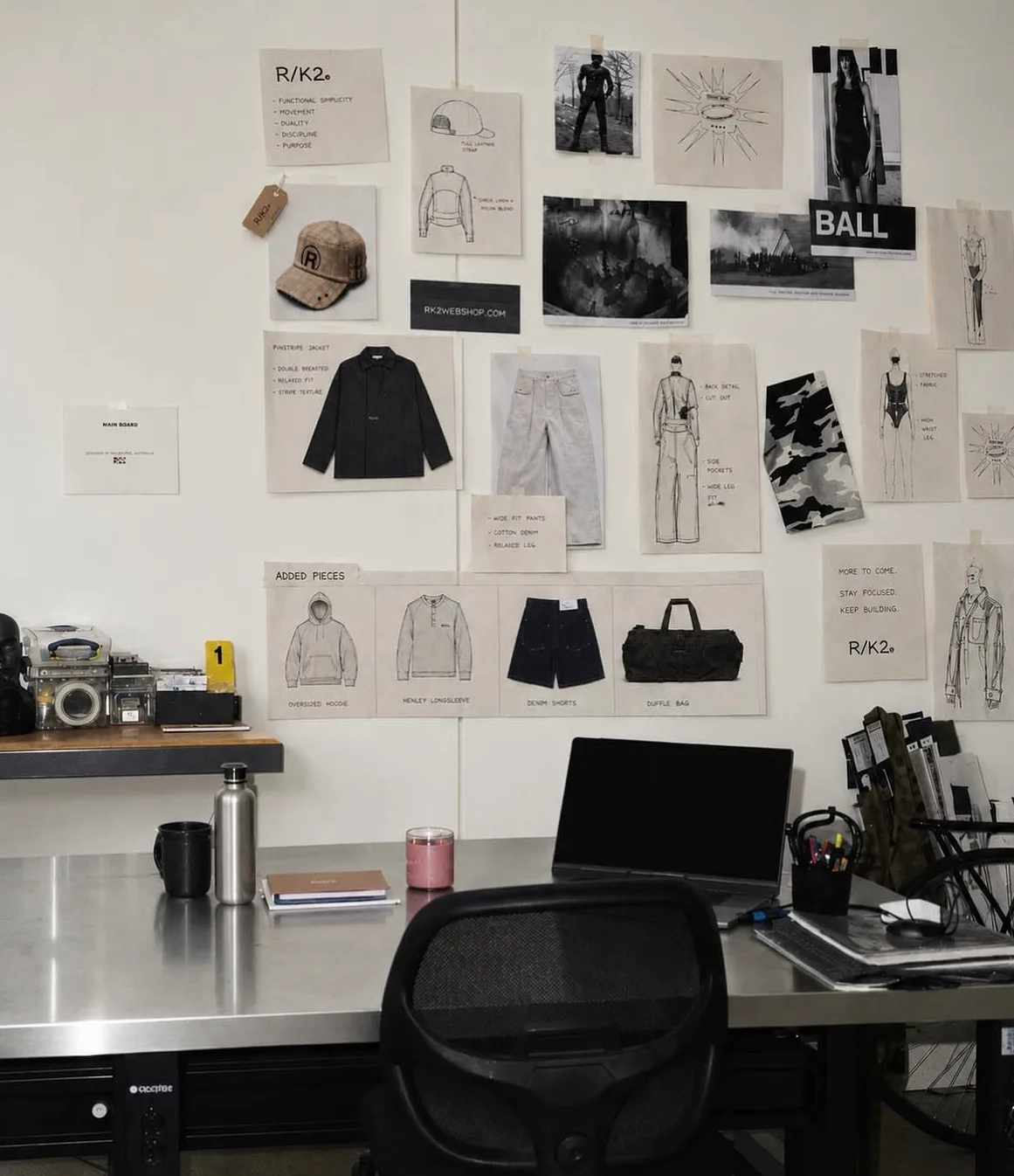
02 / By Minh Tri Ha / 2 min read
Where R/K2 sits among minimal European labels
R/K2 next to Lemaire, Jil Sander, Ann Demeulemeester, Our Legacy, Han Kjøbenhavn and Arte Antwerp: founding year, city and what each label is known for.
03 / By Minh Tri Ha / 5 min read
How to wash and care for Japanese denim
How to wash Japanese and selvedge denim: how often, at what temperature, how to dry it, how to handle shrinkage and indigo transfer, and how to store it.
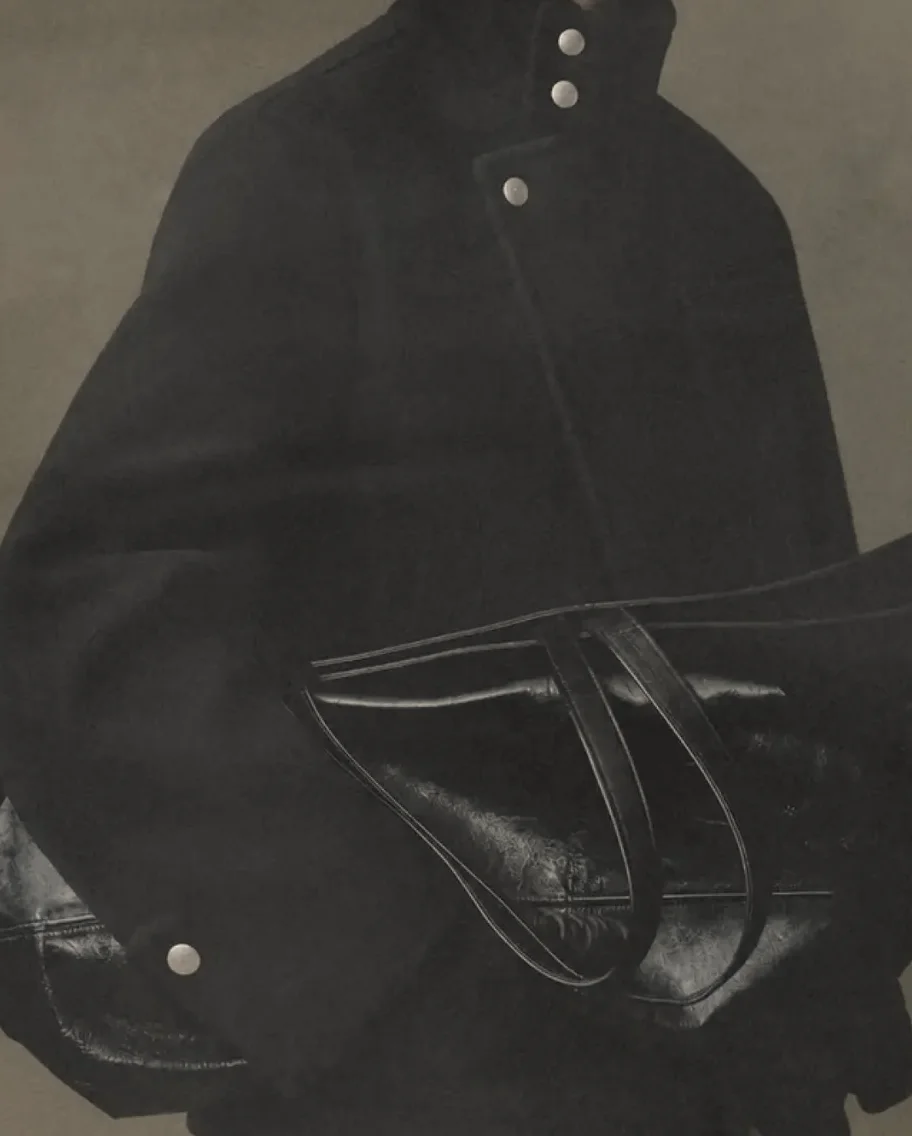
04 / By Peter Lanssens, HLN / 2 min read
R/K2 in HLN: 500 visitors expected for R/K2://SOURCE in Kortrijk
HLN on R/K2://SOURCE: a runway show of the new winter collection at 4N20 in Kortrijk on 21 November 2026, with about 500 visitors expected.
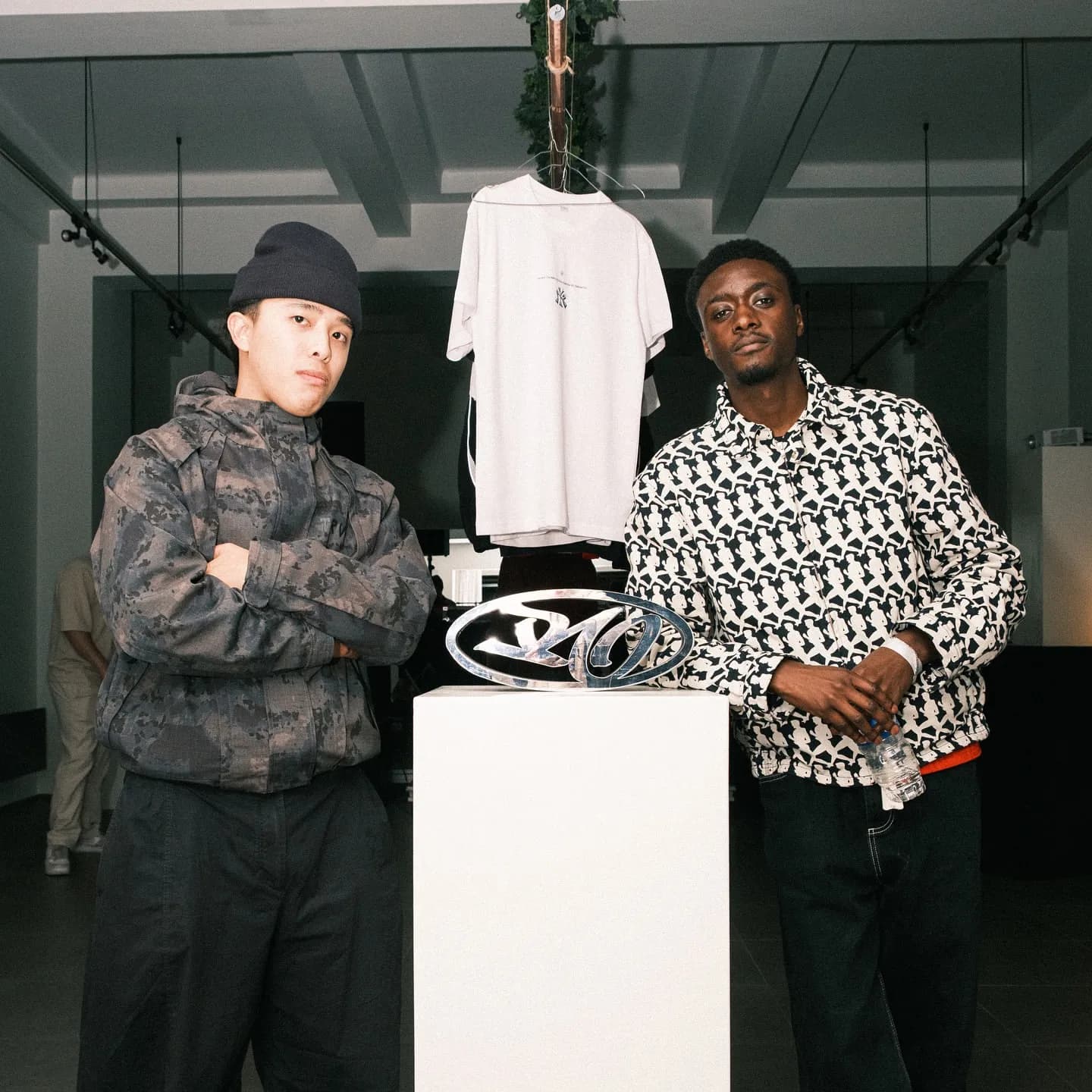
05 / By Minh Tri Ha / 2 min read
Exhibition 8500: the R/K2 launch at Wonder Festival in Kortrijk
On 16 October 2025 R/K2 launched with Exhibition 8500 at Wonder Festival in Kortrijk: more than 250 people, the short film Reflect To Grow, live music and DJs.
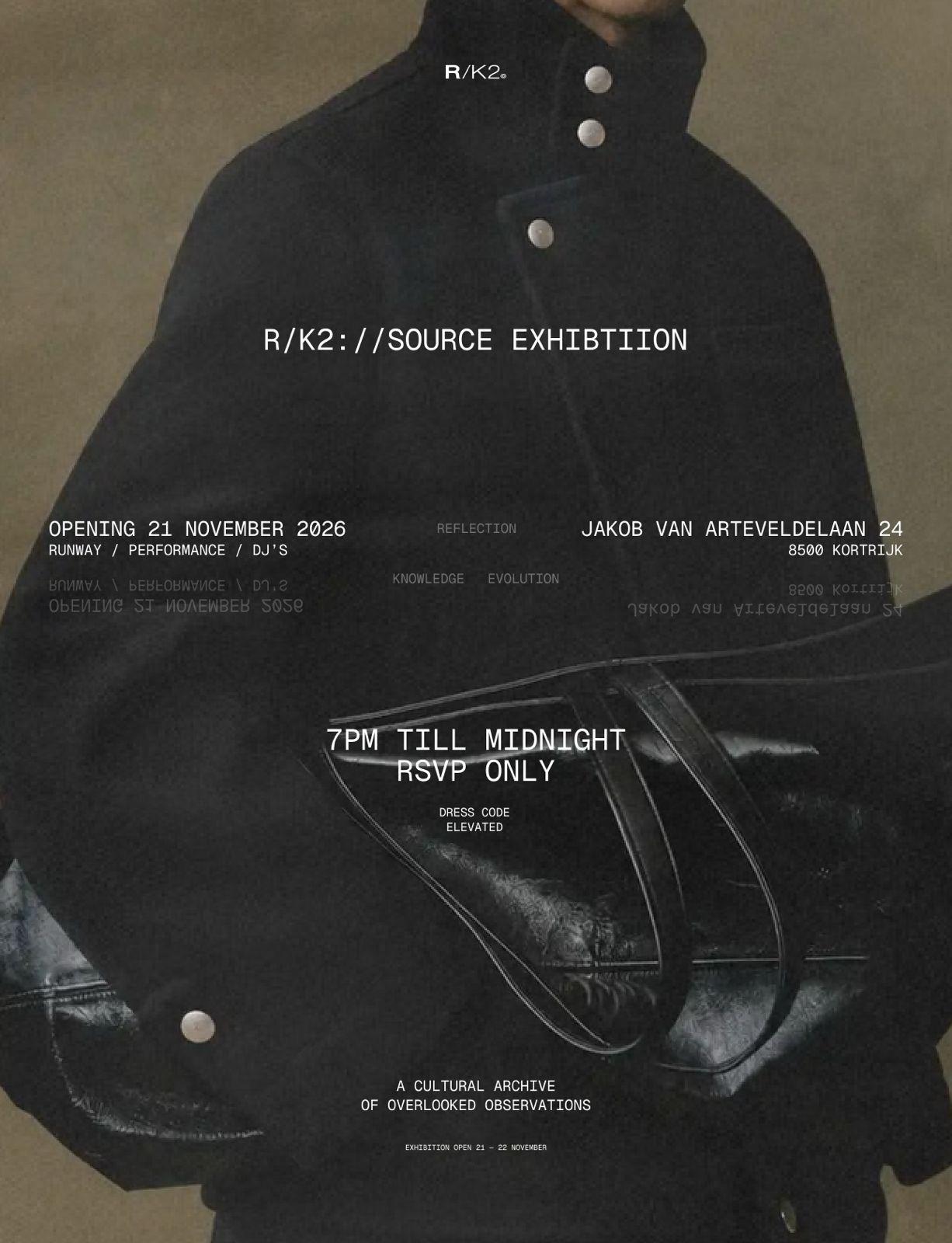
06 / By Minh Tri Ha / 2 min read
R/K2://SOURCE Exhibition: two days inside the archive in Kortrijk
R/K2://SOURCE is a two-day exhibition at 4N20 in Kortrijk on 21 and 22 November 2026: a runway presentation, live performance, DJs and the archive.
07 / By Minh Tri Ha / 3 min read
Four months at Chrome Mag Berlin: design, video and creative direction
Minh Tri Ha on his internship at Chrome Mag in Berlin: a magazine, a TV logo, shoots with OBEY, Mark Forster and Ski Aggu, and a first pop-up store.
08 / By Minh Tri Ha / 2 min read
R/K2 x OBEY: a pop-up store at OBEY Art Space Berlin
How R/K2 opened its first pop-up store with OBEY Art Space in Berlin in 2024: a collaboration built around print.
09 / By Minh Tri Ha / 1 min read
Capsule S24: the R/K2 jerseys, shot in Berlin
Capsule S24 was a run of red R/K2 football jerseys, made and shot in Berlin in the summer of 2024 together with young creatives and a giant football.

10 / By Minh Tri Ha / 3 min read
How R/K2 works as an archive: clothing, film, photography and objects
R/K2 is a fashion label that works as a cultural archive: how it documents the overlooked and turns it into clothing, film, photography and exhibitions.
11 / By Minh Tri Ha / 2 min read
R/K2 in photography and film: shoots, short films and exhibitions
The photography and film work of R/K2, the fashion label from Kortrijk: the short film Reflect To Grow, Capsule S24 in Berlin, Tracksuit Chronicles and more.

12 / By Minh Tri Ha / 2 min read
R/K2 OS: the system I built behind the brand
R/K2 OS is the internal system Minh Tri Ha built for R/K2: collections, tech packs, production, shoots, fits, events and RSVPs in one place.
13 / By Minh Tri Ha / 3 min read
Building the R/K2 webshop: a headless Shopify store in Next.js
Why Minh Tri Ha built the R/K2 webshop himself as a headless store: Next.js on the front, Shopify as the backend, and what that gives the brand.
14 / By Minh Tri Ha / 6 min read
Belgian clothing brands: from the Antwerp Six to independent labels
Belgian clothing brands in one guide: the Antwerp Six, Margiela and Raf Simons, everyday labels, Delvaux and Natan, and independent minimal labels like R/K2.
15 / By Minh Tri Ha / 6 min read
Belgian menswear brands: 14 labels for men, and what to buy
Belgian menswear brands for men who buy to keep: designer labels, tailoring, everyday labels and independents, with a comparison table and fit notes.
16 / By Minh Tri Ha / 8 min read
Belgian fashion designers: from the Antwerp Six to now
A short guide to Belgian fashion designers: the Antwerp Six, Martin Margiela, Raf Simons and the generations after them, and why Belgium still matters.
17 / By Minh Tri Ha / 6 min read
Capsule wardrobe: the minimalist wardrobe essentials, piece by piece
How many pieces a capsule wardrobe needs, a checklist of minimalist wardrobe essentials, a neutral palette and cost per wear, in tables you can use.
18 / By Minh Tri Ha / 8 min read
Japanese denim vs regular denim: the difference, and is it worth it?
Japanese denim vs regular denim: shuttle looms, selvedge, rope dyeing, slub yarns, weight in oz, raw or washed, fades, price and how to choose a fit.
19 / By Minh Tri Ha / 7 min read
Heavyweight t-shirts: how to choose the GSM, cotton and fit
What is a good GSM for a t-shirt? A buying guide to heavyweight tees: weight table, combed vs carded cotton, collar, fit, shrinkage, drape and price.
20 / By Minh Tri Ha / 6 min read
What is archive fashion? A clear guide
What archive fashion means, how it differs from vintage, why provenance matters and how to start collecting archive pieces without overpaying.
21 / By Minh Tri Ha / 6 min read
Limited drops: how they work and how not to miss one
What a limited clothing drop is, why brands release in small runs, and practical steps to get the piece and size you want before it sells out.
22 / By Minh Tri Ha / 6 min read
How to wash and care for heavyweight cotton and rib knits
What gsm means and how to wash, dry and store heavyweight cotton t-shirts and rib knits so they keep their shape, colour and fit for years.


