Belgian clothing brands: from the Antwerp Six to independent labels
The best-known Belgian clothing brands fall into three groups: designer labels such as Dries Van Noten, Ann Demeulemeester, Maison Margiela and Raf Simons; everyday labels and houses such as Essentiel Antwerp, Bellerose, Scapa, JBC and Delvaux; and independent, minimal labels such as R/K2. This guide covers more than twenty five of them, what each is known for, and how to choose.
The Antwerp Six
Most of the Belgian names that matter internationally trace back to the fashion department of the Royal Academy of Fine Arts in Antwerp. In 1986 six of its graduates travelled to London together: Walter Van Beirendonck, Ann Demeulemeester, Dries Van Noten, Dirk Van Saene, Dirk Bikkembergs and Marina Yee. The British press called them the Antwerp Six, and the name stayed.
They never shared one style. Dries Van Noten became known for print, colour and fabric. Ann Demeulemeester for black and white, long lines and poetic tailoring. Walter Van Beirendonck for graphic, outspoken menswear and decades of teaching at the Academy. Dirk Bikkembergs for menswear, boots and an early link between fashion and football. Dirk Van Saene and Marina Yee kept smaller, more personal bodies of work. What they shared was the decision to build their labels from Belgium. Our longer piece on Belgian fashion designers tells that story in detail.
Belgian designers who shaped global fashion
Martin Margiela also studied at the Antwerp Academy, but went his own way. He founded Maison Martin Margiela in Paris in 1988, made the construction of clothes visible and stayed out of the spotlight himself. The house, now Maison Margiela, is based in Paris; in 2025 it named Glenn Martens, another Antwerp graduate who had led Y/Project and Diesel, as creative director.
Raf Simons trained in industrial design and launched his menswear label in 1995, bringing youth culture and music onto the runway. He went on to lead Jil Sander, Dior and Calvin Klein, and became co-creative director of Prada in 2020. He closed his own label in 2022.
The list continues. A.F. Vandevorst, the Antwerp duo An Vandevorst and Filip Arickx, built a label around uniforms, felt and red crosses. Kris Van Assche led Dior Homme and later Berluti. Véronique Branquinho, an Academy graduate, became known for quiet, sensual womenswear. Olivier Theyskens, who studied at La Cambre in Brussels, led Rochas and Nina Ricci. Anthony Vaccarello, also a La Cambre graduate, has been creative director of Saint Laurent since 2016. Haider Ackermann, who studied in Antwerp, is known for fluid, draped tailoring. And Diane von Furstenberg, born in Brussels, built her label in New York around the wrap dress.
Everyday Belgian labels
Not all Belgian fashion is runway fashion. A group of well established labels dresses much of the country day to day, and several are sold well beyond it.
Essentiel Antwerp is known for colourful, playful womenswear with bold prints. Bellerose, from the Brussels area, makes relaxed, good quality casual wear for men, women and children. Scapa is known for knitwear and classic, slightly British wardrobe pieces. River Woods makes preppy casual wear with a strong focus on knitwear and shirts. Xandres makes contemporary womenswear. Mayerline is a womenswear label with a long history in Belgian stores. And JBC, a family company, is one of the best known Belgian fashion chains for the whole family.
Leather, accessories and couture
Delvaux, from Brussels, is one of the oldest luxury leather goods houses in the world, dating back to 1829, and is known for structured handbags such as the Brillant. Natan, also in Brussels, is a couture house associated with Edouard Vermeulen and known for dressing members of the Belgian royal family.
Both show another side of Belgian fashion: craft, patience and a long view of objects that are meant to be kept.
What Belgian brands have in common
From a couture house in Brussels to a young label in Antwerp, Belgian brands tend to share a few habits. They put cut and material before logos. They often grow slowly, sometimes without advertising, and stay independent for a long time. And they design for years of wear rather than for a single season.
That is partly a matter of scale. Belgium is a small market, so a brand has to be good enough to travel, and the Academy in Antwerp and La Cambre in Brussels have trained designers to build a point of view of their own. The result is a country that punches far above its size, in fashion as in design and architecture.
Independent and minimal labels
Between the designer houses and the high street sits a group of independent labels that work with restraint: few details, considered fabrics and small production. Christian Wijnants, an Antwerp designer, is known for knitwear and soft, textured pieces. Howlin' makes knitwear that people keep for years.
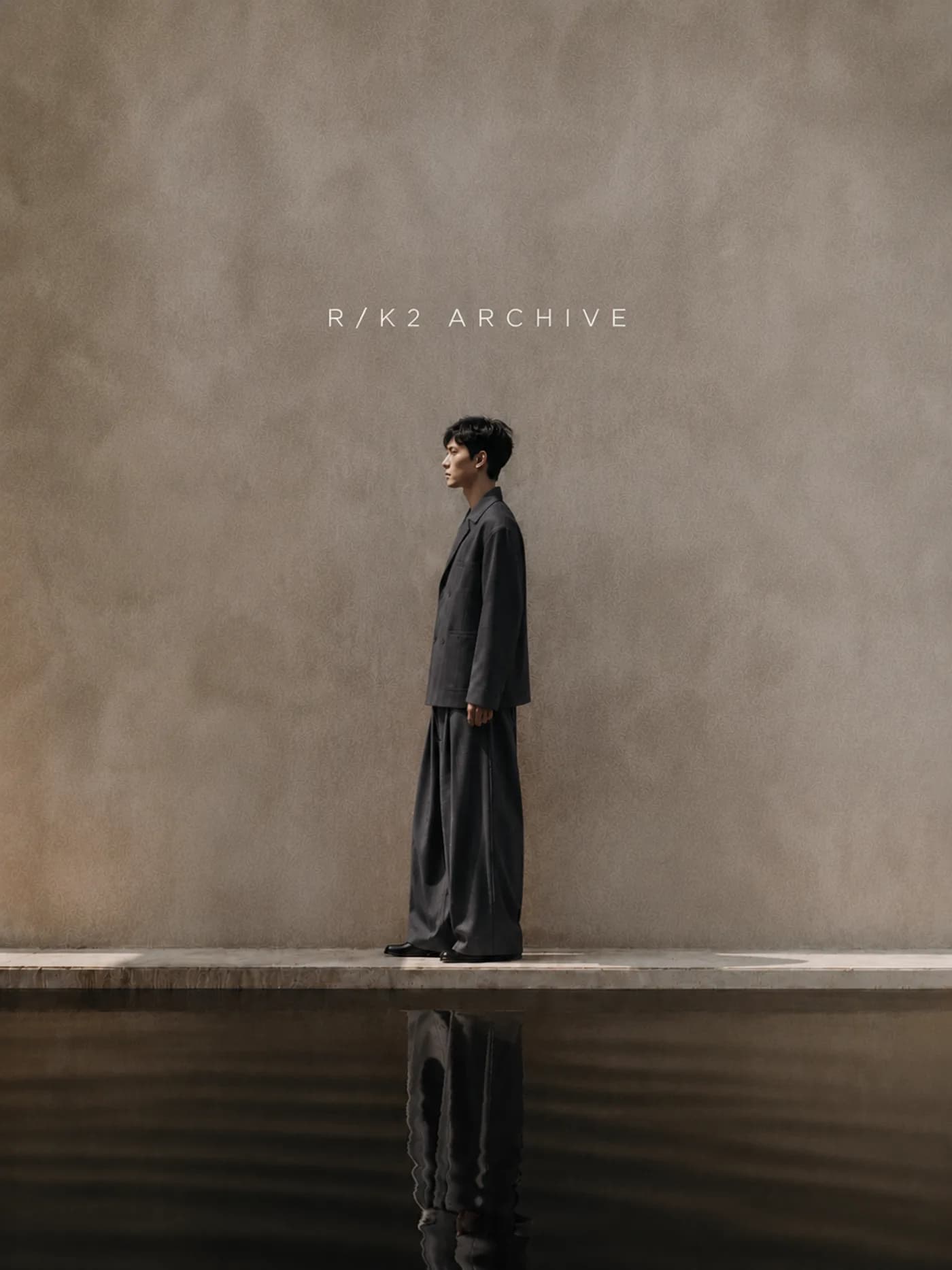
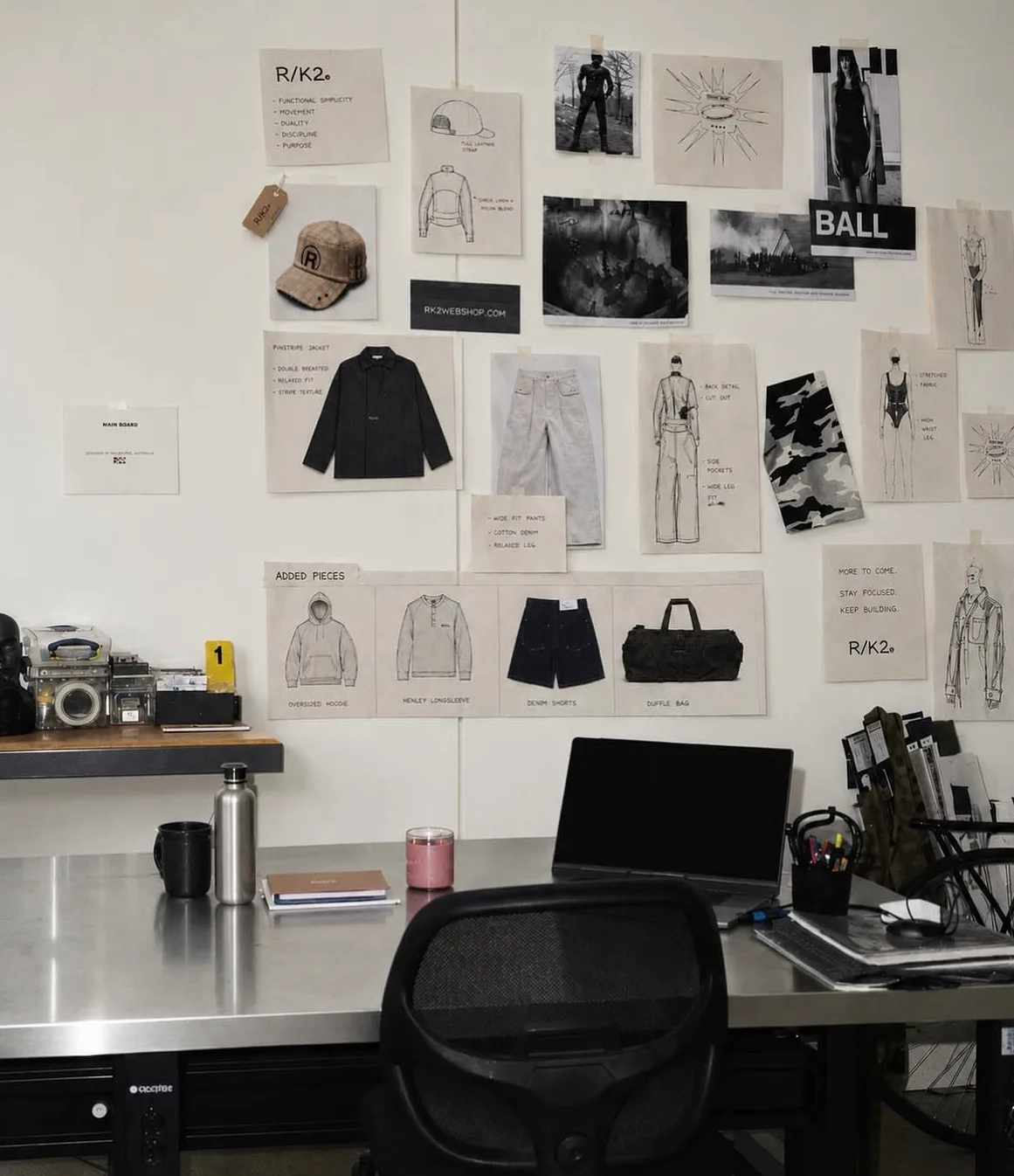
R/K2 belongs here. It is an independent Belgian label, founded in 2022, making minimal, high-end fashion in small runs: leather, tailoring and Japanese denim. Pieces are released in limited drops and move to the archive when they sell out; they are not made again. You can see the current pieces in the shop, or read where R/K2 sits next to other independent European labels.
Belgian brands at a glance
Twenty of the names above, side by side.
| Brand | Type | City | Known for |
|---|---|---|---|
| Dries Van Noten | Designer | Antwerp | Print, colour and fabric |
| Ann Demeulemeester | Designer | Antwerp | Black and white, poetic tailoring |
| Walter Van Beirendonck | Designer | Antwerp | Graphic, outspoken menswear |
| Dirk Bikkembergs | Designer | Antwerp | Menswear, boots, football |
| Dirk Van Saene | Designer | Antwerp | A small, experimental body of work |
| Maison Margiela | Designer house | Paris (Belgian founder) | Deconstruction, the Tabi boot |
| Raf Simons | Designer | Antwerp | Youth culture on the runway |
| A.F. Vandevorst | Designer | Antwerp | Uniforms, felt, the red cross |
| Véronique Branquinho | Designer | Antwerp | Quiet, sensual womenswear |
| Christian Wijnants | Designer | Antwerp | Knitwear and texture |
| Essentiel Antwerp | Everyday | Antwerp | Colourful, playful womenswear |
| Bellerose | Everyday | Brussels area | Relaxed casual wear |
| Scapa | Everyday | Belgium | Knitwear and classics |
| River Woods | Everyday | Belgium | Preppy knitwear and shirts |
| JBC | Everyday | Belgium | Fashion for the whole family |
| Xandres | Everyday | Belgium | Contemporary womenswear |
| Delvaux | Leather goods | Brussels | Structured luxury handbags |
| Natan | Couture | Brussels | Eveningwear and couture |
| Howlin' | Independent | Belgium | Knitwear |
| R/K2 | Independent | Belgium | Minimal fashion: leather, tailoring, Japanese denim |
How to choose
Start with what you want the piece to do. For a statement or an investment, the designer labels and their archives are the place to look; our guide to archive fashion explains how to buy older pieces with confidence. For a wardrobe that works every day, the everyday labels are reliable and easy to find. For something few others will wear, look at the independent labels.
Whatever you choose, judge the piece rather than the name: the cut, the weight and composition of the fabric, the finish inside, and whether the brand gives you real measurements and care instructions. That is the most Belgian way to buy clothes: fewer pieces, chosen well, kept for a long time.
Articles
Questions
The most famous Belgian clothing brands include the designer labels Dries Van Noten, Ann Demeulemeester and Raf Simons, the house founded by Martin Margiela, the leather goods house Delvaux, and everyday labels such as Essentiel Antwerp, Bellerose and JBC.
Pieces in this article


01 / By Minh Tri Ha / 6 min read
Belgian menswear brands: 14 labels for men, and what to buy
Belgian menswear brands for men who buy to keep: designer labels, tailoring, everyday labels and independents, with a comparison table and fit notes.
02 / By Minh Tri Ha / 8 min read
Belgian fashion designers: from the Antwerp Six to now
A short guide to Belgian fashion designers: the Antwerp Six, Martin Margiela, Raf Simons and the generations after them, and why Belgium still matters.
03 / By Minh Tri Ha / 2 min read
Where R/K2 sits among minimal European labels
R/K2 next to Lemaire, Jil Sander, Ann Demeulemeester, Our Legacy, Han Kjøbenhavn and Arte Antwerp: founding year, city and what each label is known for.
04 / By Peter Lanssens, HLN / 2 min read
R/K2 in HLN: 500 visitors expected for R/K2://SOURCE in Kortrijk
HLN on R/K2://SOURCE: a runway show of the new winter collection at 4N20 in Kortrijk on 21 November 2026, with about 500 visitors expected.
05 / By Minh Tri Ha / 2 min read
Exhibition 8500: the R/K2 launch at Wonder Festival in Kortrijk
On 16 October 2025 R/K2 launched with Exhibition 8500 at Wonder Festival in Kortrijk: more than 250 people, the short film Reflect To Grow, live music and DJs.
06 / By Minh Tri Ha / 2 min read
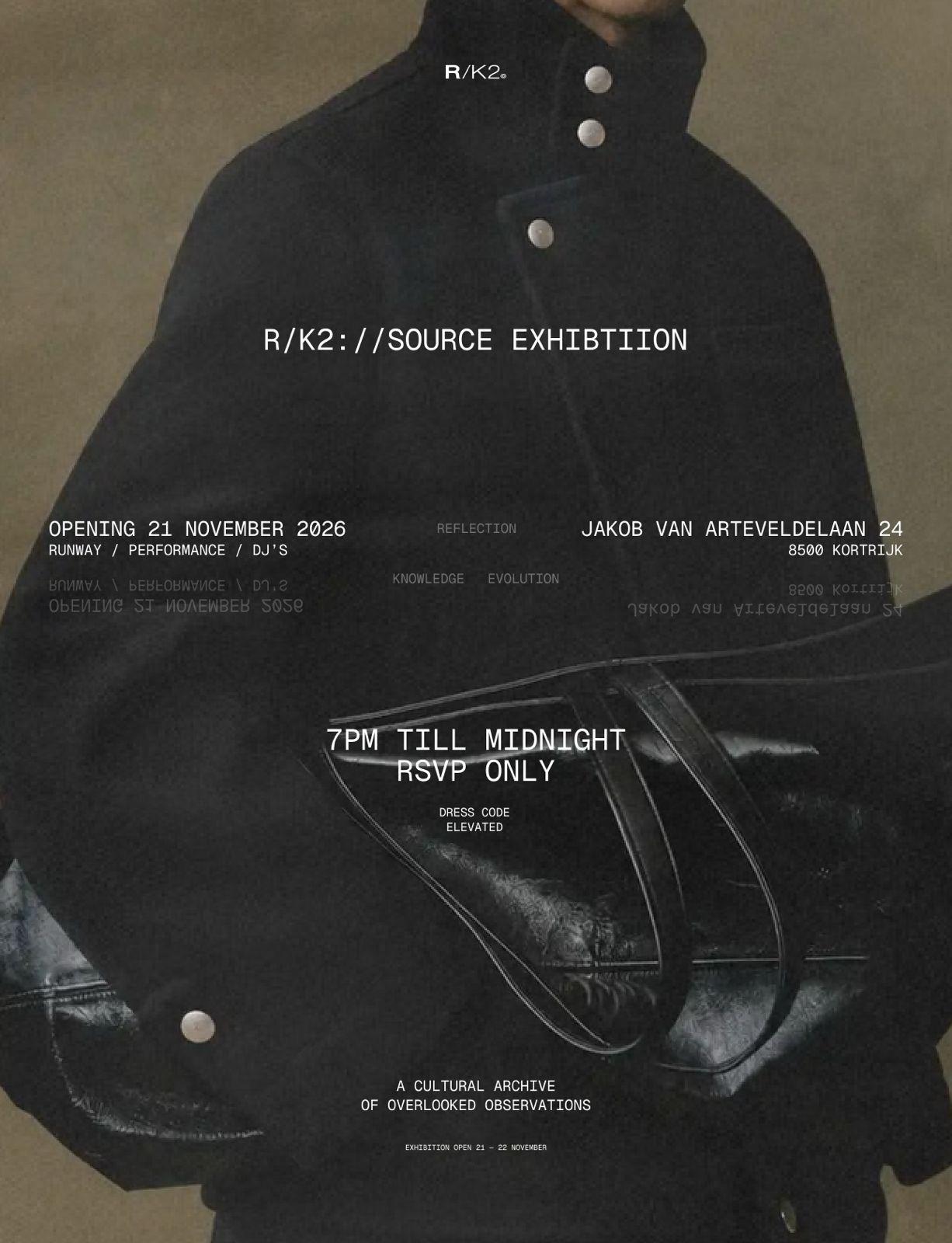
R/K2://SOURCE Exhibition: two days inside the archive in Kortrijk
R/K2://SOURCE is a two-day exhibition at 4N20 in Kortrijk on 21 and 22 November 2026: a runway presentation, live performance, DJs and the archive.
07 / By Minh Tri Ha / 3 min read
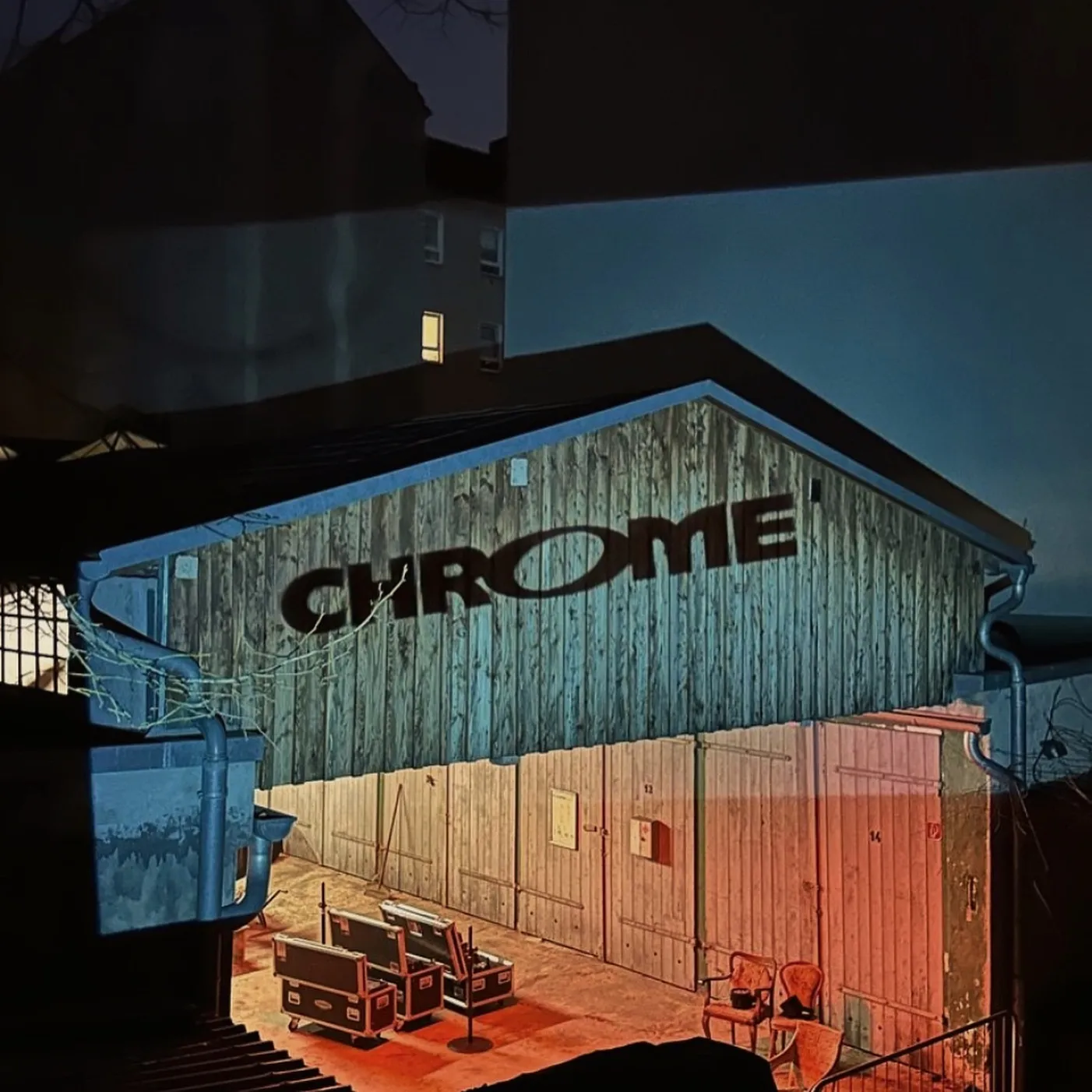
Four months at Chrome Mag Berlin: design, video and creative direction
Minh Tri Ha on his internship at Chrome Mag in Berlin: a magazine, a TV logo, shoots with OBEY, Mark Forster and Ski Aggu, and a first pop-up store.
08 / By Minh Tri Ha / 2 min read
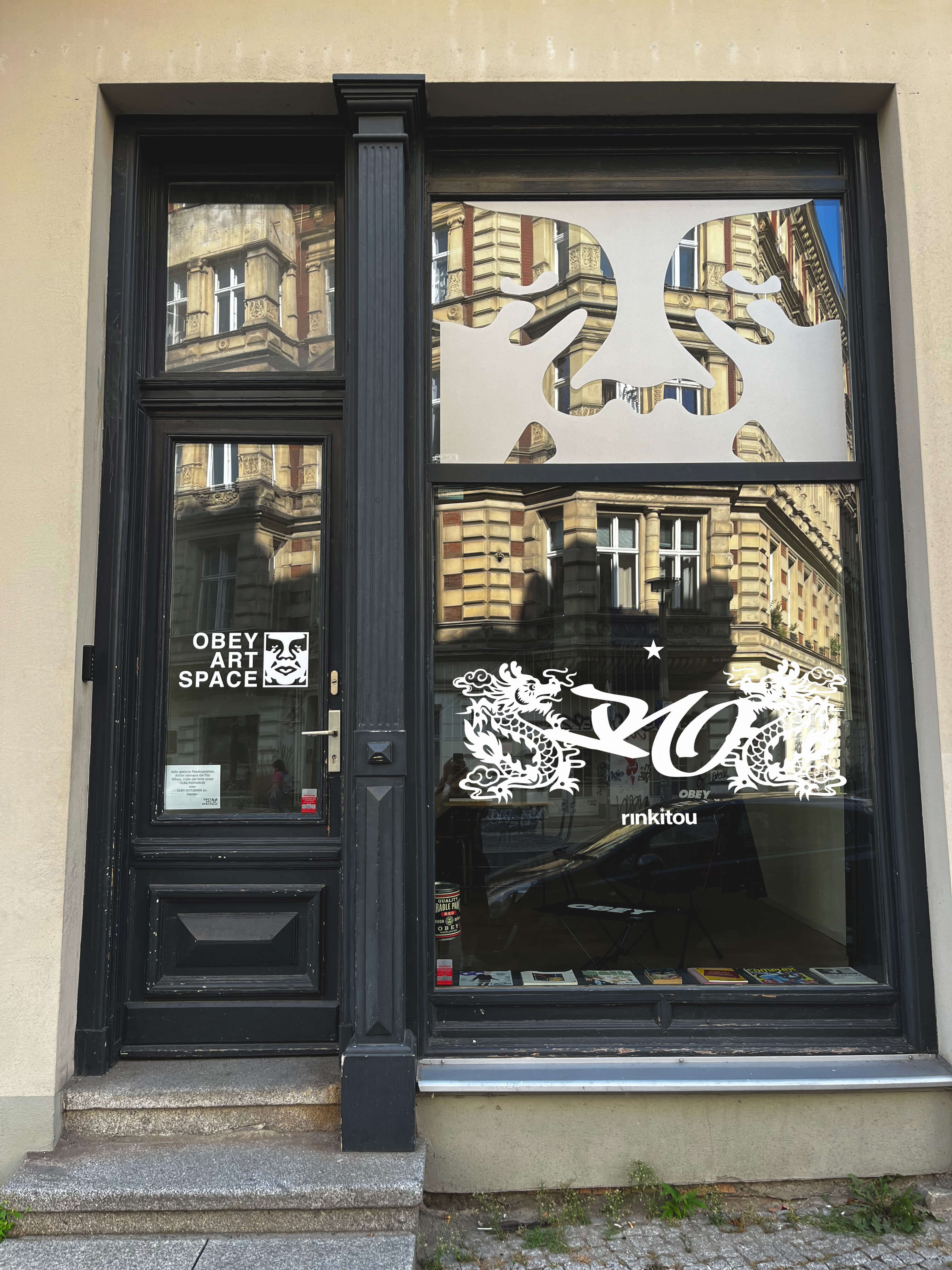
R/K2 x OBEY: a pop-up store at OBEY Art Space Berlin
How R/K2 opened its first pop-up store with OBEY Art Space in Berlin in 2024: a collaboration built around print.
09 / By Minh Tri Ha / 1 min read
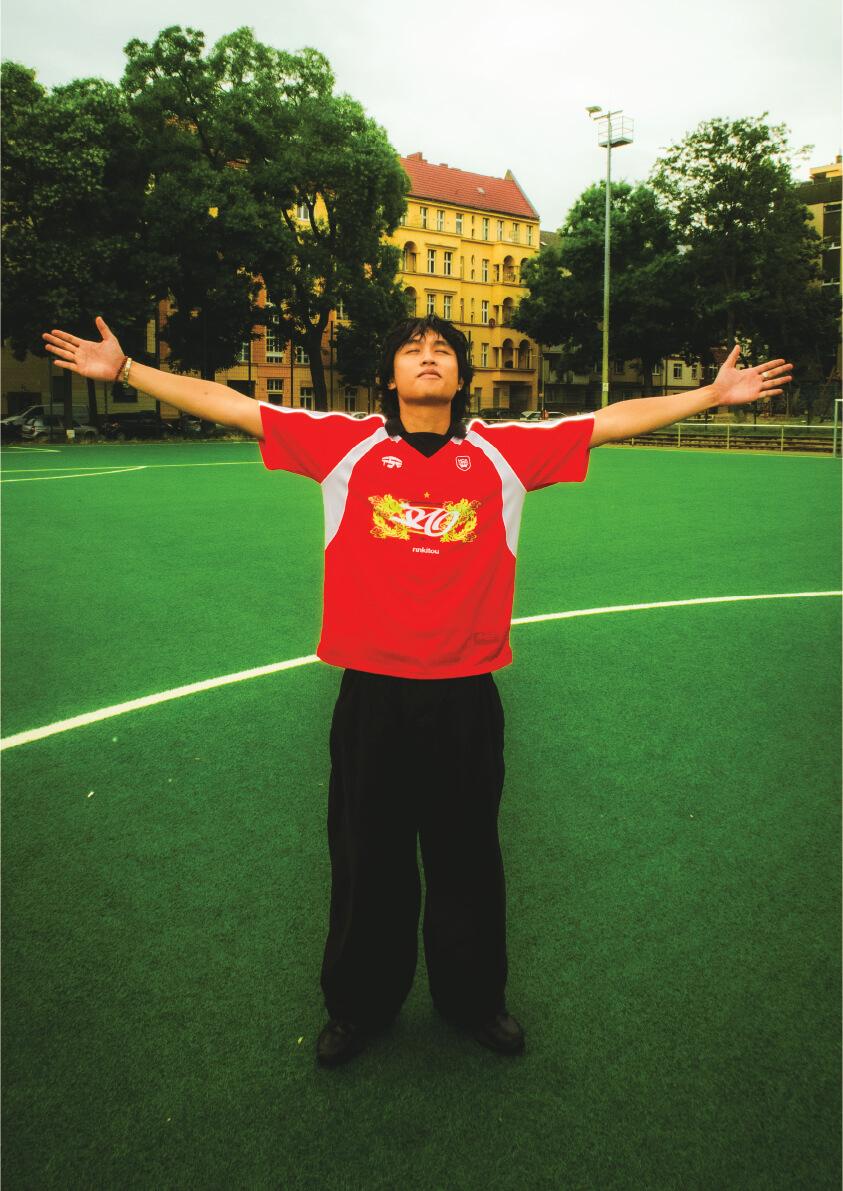
Capsule S24: the R/K2 jerseys, shot in Berlin
Capsule S24 was a run of red R/K2 football jerseys, made and shot in Berlin in the summer of 2024 together with young creatives and a giant football.
10 / By Minh Tri Ha / 3 min read
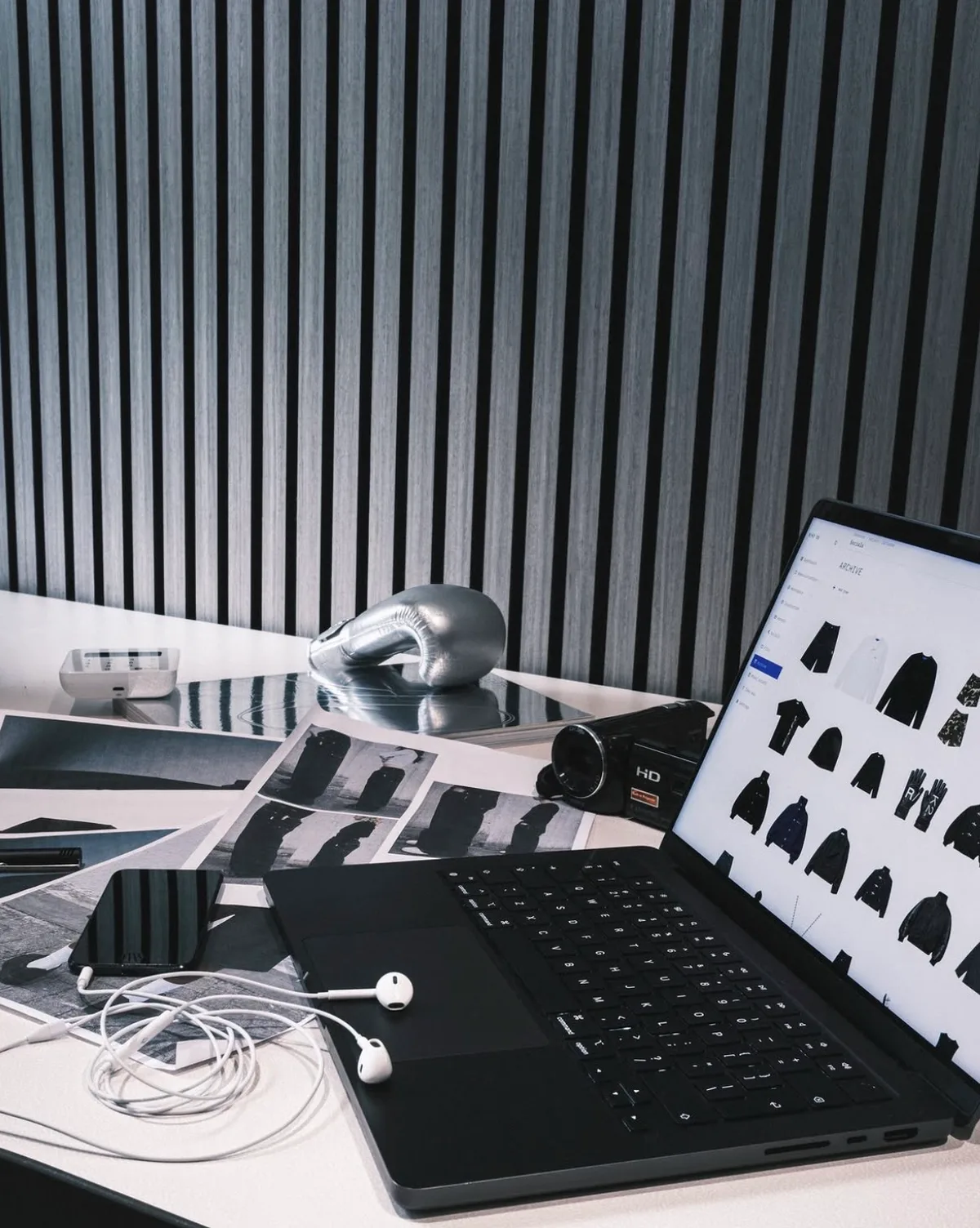
How R/K2 works as an archive: clothing, film, photography and objects
R/K2 is a fashion label that works as a cultural archive: how it documents the overlooked and turns it into clothing, film, photography and exhibitions.
11 / By Minh Tri Ha / 2 min read
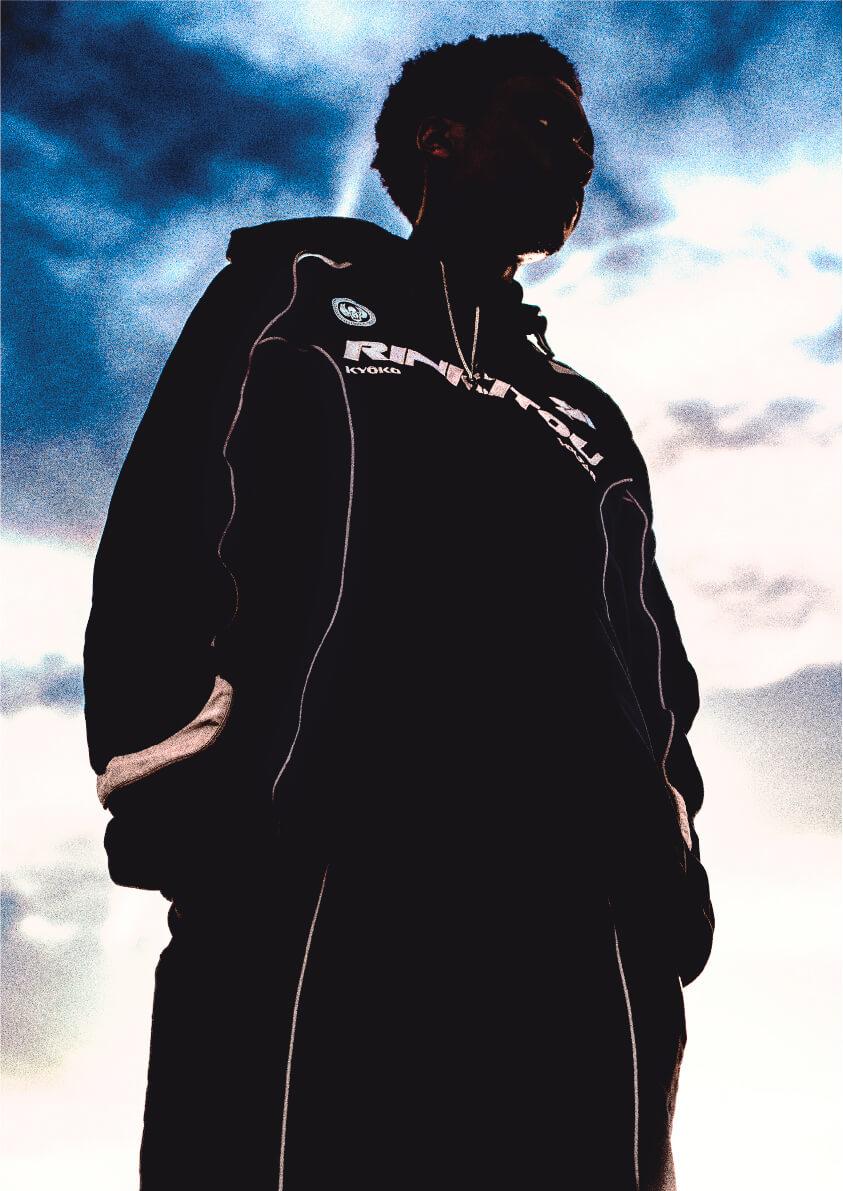
R/K2 in photography and film: shoots, short films and exhibitions
The photography and film work of R/K2, the fashion label from Kortrijk: the short film Reflect To Grow, Capsule S24 in Berlin, Tracksuit Chronicles and more.
12 / By Minh Tri Ha / 2 min read
R/K2 OS: the system I built behind the brand
R/K2 OS is the internal system Minh Tri Ha built for R/K2: collections, tech packs, production, shoots, fits, events and RSVPs in one place.
13 / By Minh Tri Ha / 3 min read
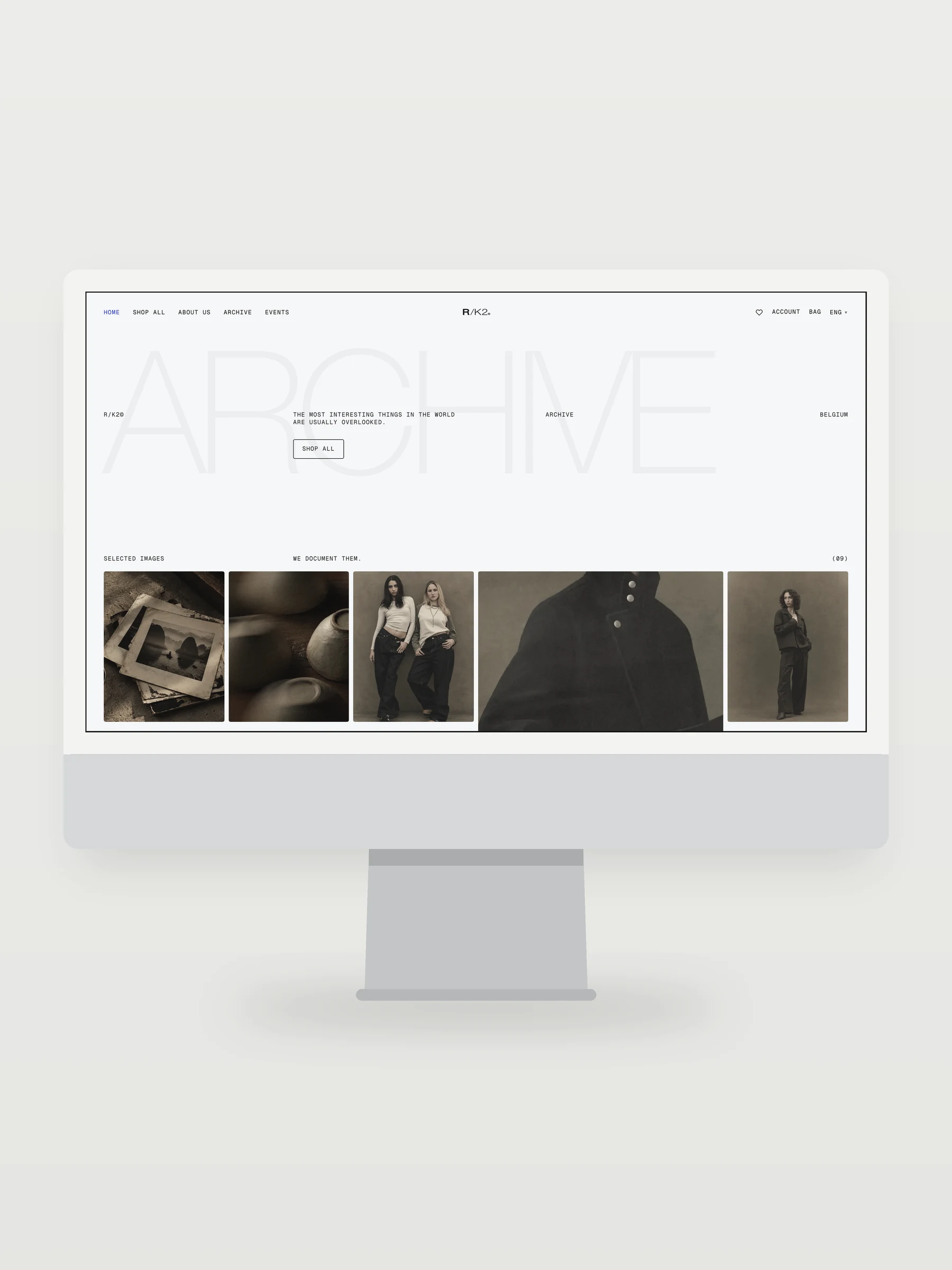
Building the R/K2 webshop: a headless Shopify store in Next.js
Why Minh Tri Ha built the R/K2 webshop himself as a headless store: Next.js on the front, Shopify as the backend, and what that gives the brand.
14 / By Minh Tri Ha / 6 min read
Capsule wardrobe: the minimalist wardrobe essentials, piece by piece
How many pieces a capsule wardrobe needs, a checklist of minimalist wardrobe essentials, a neutral palette and cost per wear, in tables you can use.
15 / By Minh Tri Ha / 8 min read
How to choose a leather jacket: a complete buying guide
How to choose a leather jacket: lambskin vs cowhide, full grain vs genuine leather, fit, lining, hardware, price and ageing, with a checklist for the shop.
16 / By Minh Tri Ha / 8 min read
Japanese denim vs regular denim: the difference, and is it worth it?
Japanese denim vs regular denim: shuttle looms, selvedge, rope dyeing, slub yarns, weight in oz, raw or washed, fades, price and how to choose a fit.
17 / By Minh Tri Ha / 7 min read
Heavyweight t-shirts: how to choose the GSM, cotton and fit
What is a good GSM for a t-shirt? A buying guide to heavyweight tees: weight table, combed vs carded cotton, collar, fit, shrinkage, drape and price.
18 / By Minh Tri Ha / 6 min read
What is archive fashion? A clear guide
What archive fashion means, how it differs from vintage, why provenance matters and how to start collecting archive pieces without overpaying.
19 / By Minh Tri Ha / 6 min read
Limited drops: how they work and how not to miss one
What a limited clothing drop is, why brands release in small runs, and practical steps to get the piece and size you want before it sells out.
20 / By Minh Tri Ha / 6 min read
How to wash and care for heavyweight cotton and rib knits
What gsm means and how to wash, dry and store heavyweight cotton t-shirts and rib knits so they keep their shape, colour and fit for years.
21 / By Minh Tri Ha / 6 min read
How to care for a leather jacket: cleaning, rain and storage
How to clean, condition, dry and store a leather jacket so it lasts for years: what to do after rain, how often to condition and what never to do.
22 / By Minh Tri Ha / 5 min read
How to wash and care for Japanese denim
How to wash Japanese and selvedge denim: how often, at what temperature, how to dry it, how to handle shrinkage and indigo transfer, and how to store it.


